
Flexible Interview for ICD-11 (FLII-11)
About The Research
Background and Development
The WHO Flexible Interview for ICD-11 (FLII-11) is a fully structured diagnostic interview currently being developed and tested as a tool for use in large-scale epidemiological, population-based, and clinical studies of mental disorders. The Columbia-WHO Center for Global Mental Health has led the development of the FLII-11 in response to a growing need among WHO member states for open-source diagnostic tools for clinical and epidemiological studies consistent with diagnostic requirements for mental, behavioural and neurodevelopmental disorders in the Eleventh Revision of the International Classification of Diseases (ICD-11), adopted by the World Health Assembly in 2019. The FLII-11 provides a diagnostic evaluation of a range of mental disorders responsible for most of the global disease burden related to mental health and substance use. The FLII-11 also comprises a detailed evaluation of access, utilization, and satisfaction with mental health services. The FLII-11 can be administered by trained lay interviewers, and an adaptation of the FLII-11 for adolescents aged 13-17 is also available.
FLII-11 Core Content
The FLII-11 can be used to capture lifetime, past year, or current prevalence. The instrument is modular so that sponsoring countries or institutions can select the areas of most interest based on their study’s aims. Available FLII-11 modules are listed below. Modules indicated by asterisks (*) below are those considered by WHO to be minimum required elements for population-based epidemiological studies due to their substantial contribution to global disease burden.
- Demographic Information
- *Mood Episodes and Mood Disorders
- *Psychotic Symptoms and (Probable) Primary Psychotic Disorder
- *Anxiety and Fear-Related Disorders
- Obsessive-Compulsive and Related Disorders (OCD and Hypochondriasis)
- Post-Traumatic Stress Disorder (PTSD) and Complex PTSD
- Eating Disorders
- *Disorders Due to Substance Use
- Disorders Due to Addictive Behaviours
- Attention Deficit Hyperactivity Disorder
- Possible Secondary Mental or Behavioural Syndrome
- Possible Substance-Induced Mental Disorder
- *Suicidal Ideation and Behaviour
- *Mental Health Service Utilization
Mental Health Services Utilization Module
The Mental Health Services Utilization module is a novel tool that assesses access to mental health service access, utilization of formal and alternative health services, and satisfaction and perceived effectiveness of services received. This information is critical for WHO in order to examine how effectively needs for mental health services are being addressed in the local context, depending on nature of the individual’s mental health needs. This tool will help WHO and WHO member states to evaluate progress toward the goals in WHO’s Comprehensive Mental Health Action Plan (MHAP), 2013-2030, as well as those articulated in the United National Sustainable Development Goals (SDGs), specifically SDG 3.4 on noncommunicable diseases, SDG 3.5 on substance abuse and SDG 3.8 on universal health coverage.
Climate Change Impact Module
We have also developed the Climate Change Impact (CCI) Module to be administered alongside the FLII-11. The CCI is part of an effort to examine structural drivers underlying mental health outcomes in specific populations. The CCI consists of three parts: The climate impact tool assesses the practical economic and occupational impacts of climate change, and the diverse array of actions people are taking to adapt. The migration history and intentions tool assesses past or anticipated migration and displacement as related to climate change. Finally, the climate vulnerability tool is a novel measure of social vulnerability to climate change at the household level that can be customized for numerous settings and contexts.
FLII-11 Testing Process
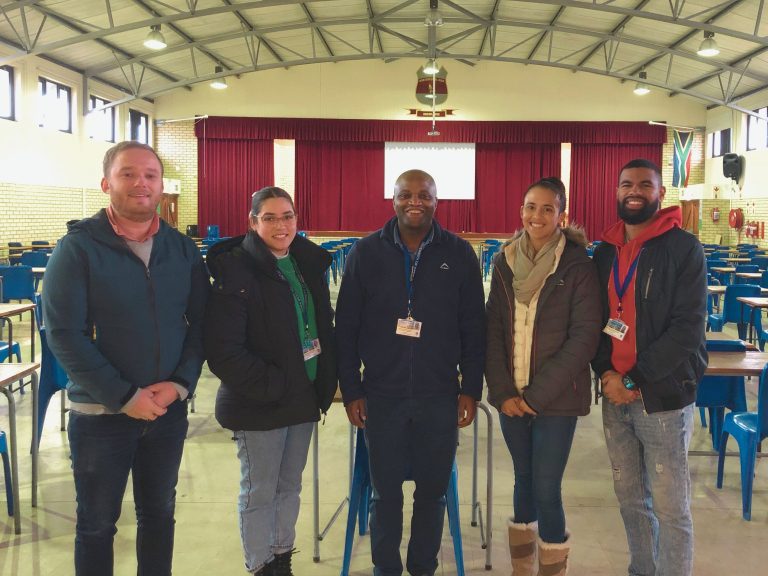
The Columbia-WHO Center for Global Mental Health is currently leading a multi-year testing process leading up to WHO’s planned open-access publication of the FLII-11, during which interested member states and research institutions can use the FLII-11 and participate in its testing. This program of work includes the development and implementation of feasibility, utility and validity testing protocols, including translation and cultural adaptation, and review by persons with lived experience, setting the stage for global data analyses and dissemination. Countries currently engaged in the testing process include Brazil, China, Colombia, Georgia, Germany, India, Liberia, Lithuania, Mexico, Pakistan, South Africa, Sri Lanka, Tunisia and Uganda. About half our partners are currently using the FLII-11 in the context of national mental health surveys being undertaken by their governments.
FLII-11 Team
The Columbia-WHO Center for Global Mental Health oversees daily activities related to testing and survey implementation for this program of work. Under the leadership of Dr. Geoffrey M. Reed, a broad international team that includes Milli Wijenaike-Bogle, MPH, Dr. Aemal Akhtar, and Center core and affiliated faculty members Dr. Michael First, Dr. Dan Stein, Dr. Juan Francisco Flores-Vázquez, Dr. T.S. Jaisoorya, Dr. Emmanuel Mwesiga, and Columbia-WHO Global Mental Health Scholars Dr. Karen Maré, José Ángel García-Pacheco and Sehwah Sonkarlay participate in the further development, testing and dissemination of the FLII-11 at the international level and in the context of a specific national projects.
WHO member states or research institutions interested in participating in the FLII-11 testing process or learning more about this tool should contact us here:
FLII-11 Publications
Reed, G. M., Maré, K. T., First, M. B., Jaisoorya, T. S., Rao, G. N., Dawson-Squibb, J.-J., Lochner, C., van Ommeren, M., & Stein, D. J. (2024). The WHO Flexible Interview for ICD-11 (FLII-11). World Psychiatry, 23, 359-360. https://doi.org/10.1002/wps.21227
Jaisoorya, T. S., Rao, G. N., Reed, G. M., Binu, V. S., Thennarasu, K., Stein, D. J., Maré, K. T., Lochner, C., García-Pacheco, J. A., & Benegal, V. (2025). Examining the psychometric properties of the Flexible Interview for ICD-11 (FLII-11) among adults in India. Journal of Psychiatric Research, 184, 439-445. https://doi.org/10.1016/j.jpsychires.2025.03.024
Jogi, L., Khandelwal, H., Sharma, A., Singh, N., Jaisoorya, T. S., Reed, G. M., Maré, K. T., Rao, G. N., & Benegal, V. (2025). Lay-interviewer training protocol for the WHO Flexible Interview for ICD-11 for that National Mental Health Survey – 2 (India). Indian Journal of Psychiatry, 67, 375-38. https://doi.org/10.4103/indianjpsychiatry.indianjpsychiatry_153_25